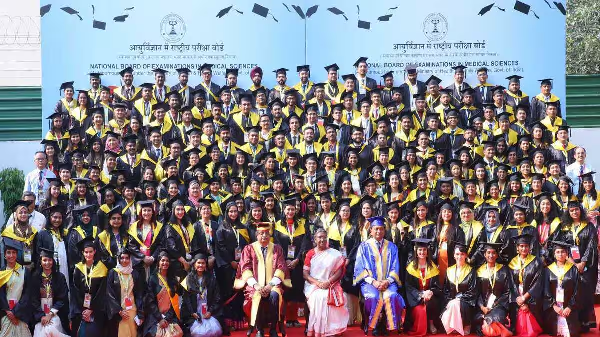
The National Board of Examinations in Medical Sciences (NBEMS) and Dr. Abhijat Sheth have achieved a Guinness World Records title for attracting the most viewers of an artificial intelligence in healthcare lesson live stream on YouTube, marking a significant milestone in digital medical education.
The record was established on 25 February 2026 in New Delhi, where an impressive 17,999 viewers joined the live online session, demonstrating the growing global interest in the application of artificial intelligence in healthcare.
The record-breaking lesson was delivered by Dr. Anurag Agarwal, MD, a distinguished expert in Artificial Intelligence in Healthcare. During the session, Dr. Agarwal explained how AI is transforming modern medicine by enhancing disease diagnosis, supporting clinical decision-making, improving patient care, streamlining healthcare systems, and advancing medical research.
Following a comprehensive verification process, Guinness World Records officially recognized the achievement, awarding the record for the most viewers of an artificial intelligence in healthcare lesson live stream on YouTube, with 17,999 participants watching the educational broadcast.
The milestone reflects the increasing importance of digital learning platforms in expanding access to high-quality medical education. By leveraging YouTube as a global educational platform, NBEMS successfully connected healthcare professionals, medical students, researchers, and technology enthusiasts with expert knowledge on one of the fastest-growing fields in modern medicine.
The achievement also highlights India’s growing leadership in integrating emerging technologies into healthcare education and promoting awareness about the transformative role of artificial intelligence in improving patient outcomes and healthcare delivery.
This Guinness World Record stands as a testament to the commitment of NBEMS, Dr. Abhijat Sheth, and Dr. Anurag Agarwal to advancing medical education through innovation. It not only celebrates a remarkable global achievement but also underscores the potential of digital platforms to make specialized healthcare knowledge accessible to audiences worldwide.